
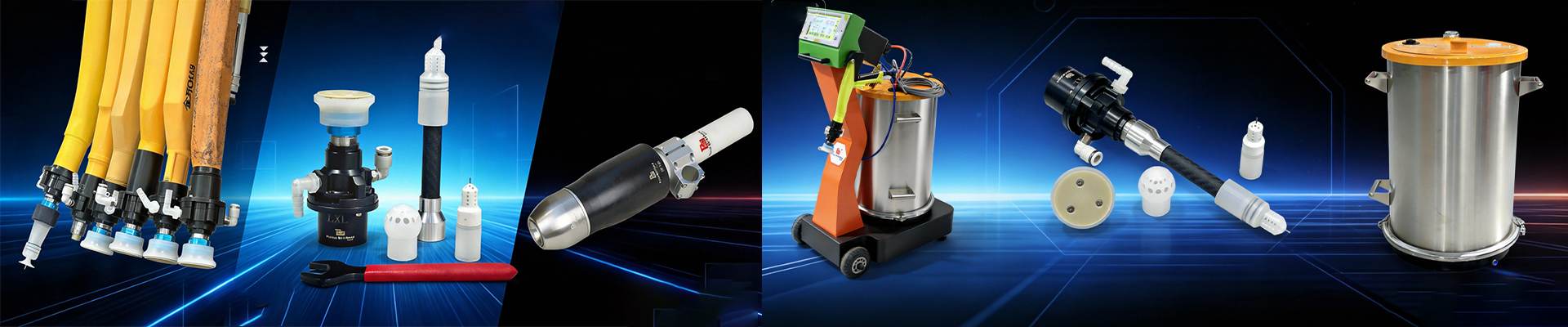
Powder Agglomeration Problems: Root Causes and Solutions – An analysis of the causes of powder agglomeration in rotary cup spray guns, providing a one-stop solution for scientific treatment and prevention.
How do powder agglomerates like those shown in the image form?What are the causes, and how should they be handled?
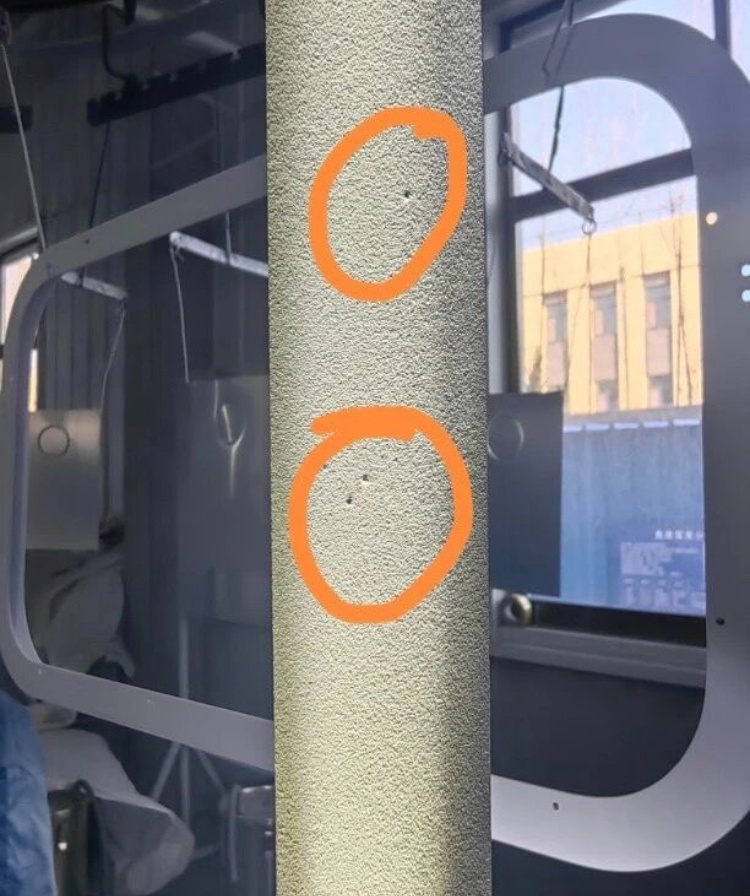
Causes of Powder Agglomeration
- Moisture Absorption
Powder coatings may absorb excessive moisture during storage or transportation. During spraying, moisture affects powder flow and adhesion, resulting in powder clumps after drying and curing.
- Equipment Issues
Wear, blockage, or damage to spraying equipment components such as the spray gun and Venturi parts can cause uneven powder output, leading to local powder buildup and agglomeration.
Malfunctions in the powder recovery system may introduce impurities into reclaimed powder, increasing the likelihood of clumping when reused.
- Electrostatic Effects
Uneven electrostatic charging of powder particles can cause mutual attraction and agglomeration. Fine powder particles are especially prone to static buildup due to friction in dry environments, which intensifies clumping.
- Environmental Factors
Excessive humidity in the spraying environment can cause powder to absorb moisture and cake.
Low temperatures reduce powder flowability, making it easier for powder to accumulate and form clumps.
- Improper Process Parameters
Unstable air pressure, excessive powder output, or incorrect spray gun distance during application can prevent uniform powder deposition, resulting in powder accumulation and agglomeration.
Treatment and Prevention Methods
- Powder Handling
Dry moisture-affected powder before use, or replace it with fresh, dry powder.
Store powder strictly according to specifications in a dry, well-ventilated environment, and control ambient humidity.
- Equipment Maintenance
Regularly inspect and maintain spraying equipment, and promptly replace worn or damaged components.
Clean spray guns, hoses, and pipelines to prevent blockages.
Inspect the powder recovery system to avoid contamination of reclaimed powder.
- Static Electricity Control
Improve environmental humidity levels to reduce static buildup.
Use antistatic agents or measures to eliminate electrostatic charge on powder particles.
- Environmental Control
Maintain appropriate temperature and humidity in the spraying area.
Recommended conditions: 18–25°C temperature and 40%–60% relative humidity.
- Process Adjustment
Optimize air pressure, powder output, and spray gun distance to ensure uniform powder adhesion.
Adopt suitable spraying methods such as reciprocating spraying or rotary spraying to improve coating consistency.