
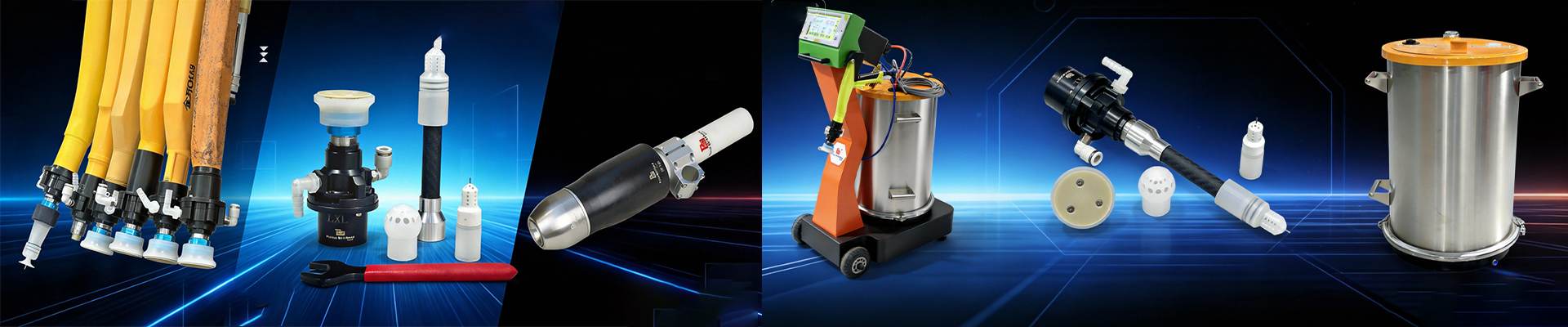
How to Improve Powder Coating on Corners and Edges
How to Improve Powder Coating on Corners and Edges
Powder coating on corners and edges is one of the most common challenges in industrial spraying. Many manufacturers can achieve acceptable results on flat surfaces, but once the workpiece has corners, edges, grooves, or recessed areas, coating quality often becomes unstable.
Common problems include uneven coverage, poor powder penetration, edge overcoating, orange peel, powder buildup, and weak coating on difficult areas. These issues not only affect product appearance but also reduce production efficiency and increase rework costs.
So how can you improve powder coating on corners and edges? Below are several practical factors that matter most.
1. Understand Why Corners and Edges Are Difficult to Coat
Flat surfaces are relatively easy to coat because the powder flow is more direct and stable. Corners and edges are different. In these areas, powder distribution becomes less uniform, and traditional spray guns often struggle to maintain good coverage.
For deep corners, narrow edges, or complex shapes, powder may not stay where it is needed. In some cases, too much powder is applied to one side, while other areas remain undercoated. This is why many manufacturers find that corners and edges are the first places where coating defects appear.
2. Choose the Right Powder Coating Spray Gun
One of the biggest reasons for poor coating on corners and edges is the spray gun itself. Traditional powder guns may work well for simple flat products, but they are often less effective on complex workpieces.
If your products include cabinet doors, metal furniture, hardware parts, box-type workpieces, or components with deep grooves and edges, using a more suitable spray solution can make a major difference.
A powder rotary cup spray gun is often a better choice for these applications because it can help improve powder distribution, increase coating uniformity, and reduce the risk of poor edge coverage.
3. Reduce Powder Buildup and Edge Defects
Another common issue is overcoating on edges. When too much powder collects on corners or edge lines, the final surface may become rough or unstable after curing. This can lead to defects such as orange peel or poor visual consistency.
To reduce this problem, operators need better control of powder output and spraying stability. A spray system that makes it easier to handle different workpiece areas can help reduce excessive buildup while still keeping enough coverage where it matters.
This is especially important for sand texture powder, metallic powder, and other coating types that are more sensitive to uneven application.
4. Improve Operator Consistency
In many factories, coating quality does not only depend on equipment. It also depends on whether workers can use the spray gun correctly and consistently.
If parameters are difficult to adjust, different operators may produce different results on the same product. This problem becomes even more obvious on corners and edges, where spray angle and powder flow matter more.
A powder coating solution that simplifies operation and reduces parameter adjustment can help workers achieve more stable coating quality in daily production.
5. Match the Spray Solution to the Workpiece
Different products require different spraying strategies. A solution that works for flat sheet metal may not work well for cabinet edges, steel doors, box corners, or comple
[27/3/2026 下午 5:30] 1234: x hardware parts.
[27/3/2026 下午 5:30] 1234: That is why workpiece-based matching is important. Before choosing a spray gun or coating setup, manufacturers should ask:
• What kind of product are we spraying?
• Are corners and edges the main difficulty?
• Do we need better penetration into grooves or recessed areas?
• Are we trying to improve efficiency, reduce rework, or both?
When the spray solution matches the actual workpiece, the improvement in coating performance is usually much more obvious.
6. Test on Real Production Parts
The best way to confirm whether a coating solution is suitable is to test it on actual production workpieces. Instead of making a decision based only on product descriptions, manufacturers should compare coating performance on their own parts.
This is especially useful when the production line includes difficult coating positions such as inside corners, deep grooves, edge lines, narrow channels, or uneven surfaces.
A real test can quickly show whether the spray solution can improve corner coverage, reduce defects, and maintain stable powder coating quality.
Why Powder Rotary Cup Spray Guns Are Often Used for Complex Areas
For manufacturers dealing with