Handheld Powder Coating Gun vs Automatic Booth: When Small-Batch Shops Need Flexibility
Small-batch powder coating shops often face the same investment question: should the next step be a more capable handheld powder coating gun, or a fully automatic powder coating booth?
The answer depends less on whether automation sounds more advanced and more on the work moving through the shop. A manual gun gives an operator freedom to change distance, angle, spray sequence, powder output, and electrostatic settings as the part changes. An automatic booth can repeat a validated gun path with high consistency, but it performs best when part families, hanging positions, colors, conveyor conditions, and quality targets are stable enough to justify programming and changeover work.
This guide compares the two approaches for job shops, metal fabricators, coating workshops, and manufacturers that need to balance flexibility with production growth.
What Is the Real Difference?
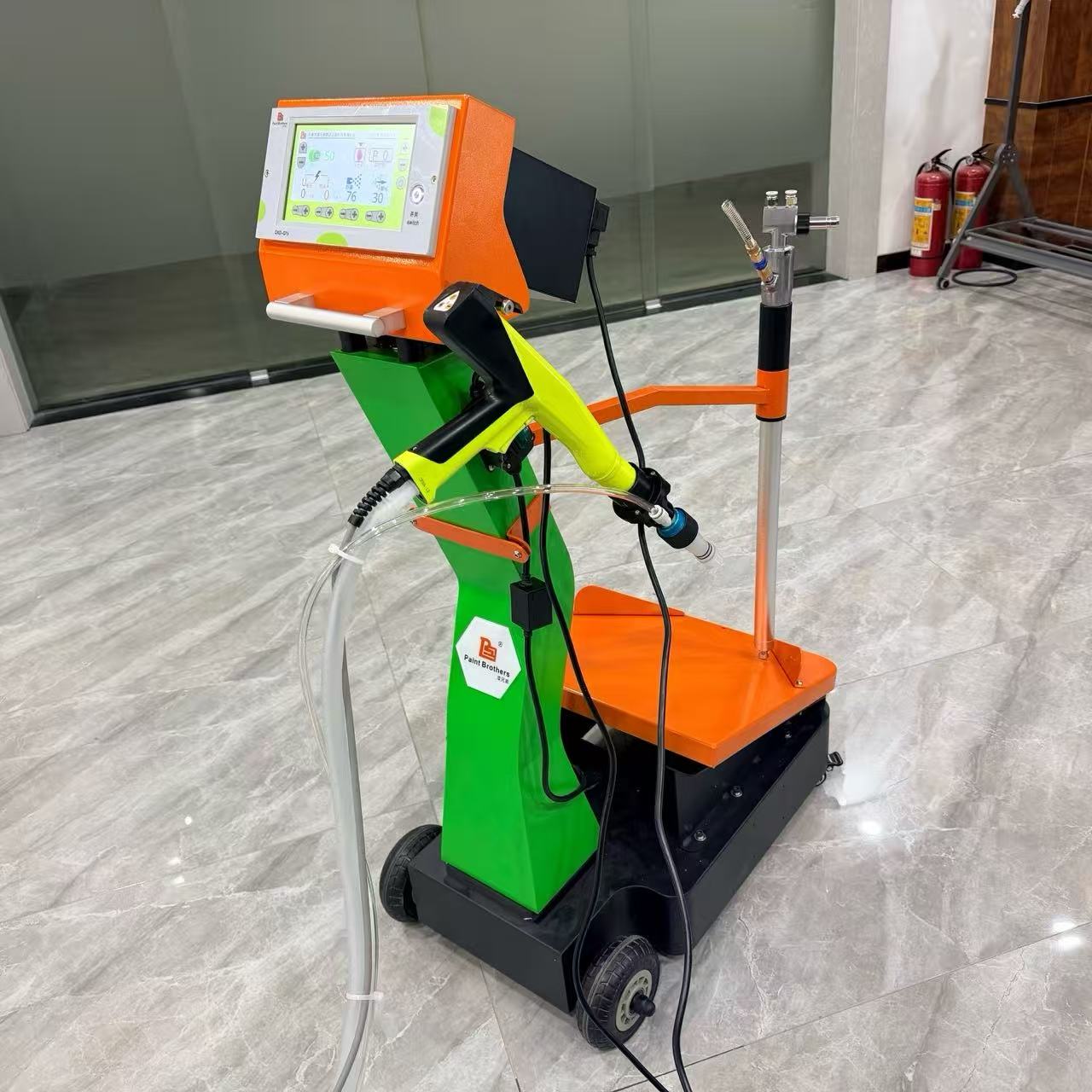
A handheld powder coating gun is controlled directly by an operator. The operator sees how the powder cloud behaves and adjusts the approach for edges, corners, channels, welded joints, and large open faces. This makes manual application responsive to variation, but quality depends on training, stable settings, and disciplined spray technique.
An automatic powder coating booth normally combines fixed or reciprocating guns, a conveyor or controlled part presentation, extraction and filtration, powder supply, controls, and often a recovery system. Automation reduces dependence on continuous manual gun movement. It does not remove the need for operators: parts still need correct hanging, grounding, recipe selection, inspection, color-change work, maintenance, and manual touch-up where geometry blocks the automatic gun path.
Handheld Gun vs Automatic Booth: Quick Comparison
| Decision factor | Handheld powder coating gun | Automatic powder coating booth |
|---|---|---|
| Best production pattern | Short runs, prototypes, repairs, changing part families | Repeat runs with stable part presentation and recipes |
| Part variety | Adapts quickly to different sizes and geometries | Most efficient when product variation can be grouped into programs |
| Setup and programming | Low programming demand; operator makes live adjustments | Requires gun positions, reciprocator settings, conveyor speed, and recipes |
| Repeatability | Depends strongly on operator technique and standard work | High repeatability after the process is validated |
| Complex recesses | Operator can change angle and make a recess-first pass | May need multiple gun angles or manual pre-touch/touch-up |
| Color change | Can be practical for frequent short-run changes with a clean powder path | Depends on booth, recovery, duct, cyclone, filter, and feed-system design |
| Labor | Continuous skilled spraying labor | Less continuous gun manipulation, but more system setup and maintenance |
| Investment scale | Lower equipment and integration requirement | Higher system, floor-space, installation, and process-control requirement |
Why Handheld Powder Coating Fits Small Batches
Small-batch production is defined by change. One order may contain welded frames, the next may contain aluminum profiles, and the next may be a repair job or a customer sample. A handheld gun lets the operator respond without building a new automatic recipe for every variation.
Fast Response to Part Geometry
An experienced operator can coat deep corners first, change direction around tube intersections, reduce output near sharp edges, and widen the spray pattern on open faces. This direct response is valuable when parts arrive with different fixtures, dimensions, or shadowed areas.
Practical for Prototypes and New Products
New parts rarely arrive with a proven coating recipe. Manual spraying allows the shop to test grounding, gun distance, powder output, voltage, current limit, spray sequence, and cure conditions before committing to an automated path. The resulting settings and inspection data can later become the foundation for automation.
Flexible Color and Powder Use
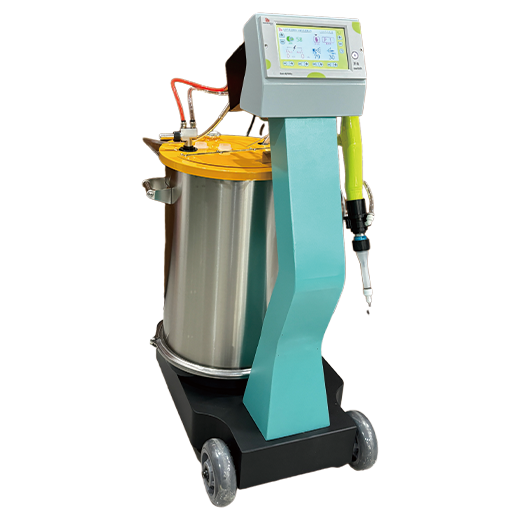
A job shop may process several colors, textures, chemistries, or customer-specified powders in one week. A compact manual system with a well-designed cleaning routine can be easier to change than a large recovery system. The actual advantage depends on hose length, pump design, powder container, booth cleaning access, contamination risk, and whether reclaim powder is used.
Where an Automatic Booth Becomes Valuable
Automation becomes attractive when the shop repeatedly coats similar products and manual variation is limiting output or quality. The important signal is not simply a high order quantity. It is a stable process that can be described, programmed, measured, and repeated.
Stable Part Families
Automatic guns work best when parts can be grouped by width, height, depth, hanging orientation, and coating difficulty. If the same rack pattern and gun positions can be reused, programming time is spread across more acceptable parts.
Consistent Line Speed and Film Build
Once the conveyor speed, gun stroke, trigger zones, powder output, electrostatic settings, and part spacing are validated, an automatic system can repeat them more consistently than freehand spraying. This is useful for products that require predictable appearance and measured film thickness across large runs.
Higher Throughput Without Continuous Gun Movement
Automation can reduce the amount of continuous manual spraying required per part. Operators can focus on loading, unloading, inspection, powder management, maintenance, and touch-up. Labor is not eliminated; it shifts toward system supervision and process control.
Do Not Compare Equipment Price Alone
The total decision should include the complete coating process. A handheld unit may have a lower initial cost, but a poorly standardized manual process can create rework, uneven film, excessive powder use, and dependence on one skilled operator. An automatic booth may improve consistency, but its business case can weaken if it spends too much time in cleaning, programming, idle changeovers, or manual correction.
Compare the following costs and constraints:
- Equipment, booth, extraction, recovery, controls, installation, and floor space.
- Fixtures, grounding maintenance, conveyor or part-handling equipment.
- Programming and trial time for each part family.
- Powder supply, reclaim management, cleaning, and contamination control.
- Operator training, inspection, touch-up, rework, and rejected parts.
- Spare parts, preventive maintenance, and downtime response.
- Expected order mix over the next several years, not only the current peak order.
Repeatability: Machine Control vs Standardized Manual Work
Automatic equipment can repeat motion, but it cannot correct unstable grounding, poor powder condition, inconsistent hanging, contaminated pretreatment, or incorrect cure. If those upstream conditions change, the system may repeat the wrong result very consistently.
Manual spraying can also be repeatable when the shop documents recipes and technique. A useful manual work instruction should define powder output, voltage or current range, gun distance, pass order, target film thickness by zone, rack-cleaning limits, and inspection frequency. Training should show operators where a part attracts powder quickly and where it needs a slower, lower-output recess pass.
Complex Parts Often Need a Hybrid Process
Many coating lines do not need to choose only one method. Automatic guns can cover the large, visible, repeatable surfaces while a handheld gun handles deep corners, tube intersections, cavities, and unusual product variants.
A hybrid sequence may include:
- Manual pre-touch: coat difficult recesses before the automatic zone builds heavy film on external edges.
- Automatic main pass: apply repeatable coverage to open faces and common surfaces.
- Manual inspection and touch-up: correct shadowed locations only where necessary.
- Film-thickness verification: measure both easy and difficult zones before approving the recipe.
This approach preserves automation where it adds value without forcing fixed guns to solve every geometry. For more detail on powder-cloud behavior, read Rotary Cup vs Conventional Powder Spray Gun. For deep corners, see How to Solve the Faraday Cage Effect in Powder Coating Deep Corners.
Powder Recovery and Color Change
Automatic booths are often associated with recovery and higher powder utilization, but recovery is only useful when the reclaimed powder remains clean, controlled, and suitable for the required finish. A high-color-mix shop may spend significant time cleaning a recovery system or may choose spray-to-waste operation for certain short runs.
A handheld system can be efficient when the operator uses controlled output, keeps the gun at a suitable distance, maintains reliable grounding, and avoids spraying beyond the part. A soft, well-directed powder cloud may reduce unnecessary overspray on irregular parts. Measure actual fresh powder use, reclaim quality, cleaning time, and accepted coated area rather than judging efficiency from visible overspray alone.
When to Choose a Handheld Powder Coating Gun
- Orders are short, mixed, or frequently interrupted by priority jobs.
- Parts vary widely in size, shape, hanging position, or difficult coating areas.
- The shop performs prototypes, repairs, samples, or product development.
- Frequent color changes make a large recovery system difficult to justify.
- Operators need direct control for recesses, welded joints, profiles, and touch-up.
- Production volume is growing, but part families are not yet stable enough for full automation.
When to Choose an Automatic Powder Coating Booth
- The same parts or related part families return in predictable volumes.
- Hanging orientation, part spacing, conveyor speed, and grounding can be standardized.
- Manual spraying is the main throughput bottleneck after upstream problems are controlled.
- Film-build repeatability and uniform appearance are difficult to maintain across shifts.
- The shop can support programming, extraction, recovery, maintenance, and changeover procedures.
- Automatic coverage can handle most surfaces, with a planned manual station for exceptions.
A Practical Trial Before Investing
Select representative parts from three groups: a high-volume easy part, a normal mixed-production part, and a difficult part that causes touch-up or rework. Run each through the proposed process under documented conditions. Record:
- Setup, hanging, programming, coating, and color-change time.
- Fresh powder use, reclaim condition, and cleaning labor.
- Film thickness on faces, edges, corners, recesses, and welded joints.
- First-pass acceptance, touch-up, rework, and rejected parts.
- Operator workload, maintenance needs, and recovery from common stoppages.
The goal is not to prove that manual or automatic equipment is universally better. It is to identify which work should remain flexible, which work is stable enough to automate, and whether a hybrid line gives the best balance.
Final Recommendation
Choose a handheld powder coating gun when part variety, short runs, development work, difficult geometry, and rapid response are more important than repeating one fixed path. Choose an automatic booth when repeat orders, standardized hanging, stable colors, measurable recipes, and sustained throughput can support the investment.
For many growing small-batch shops, the best first step is a capable manual system with disciplined recipes and inspection. As the production mix becomes clearer, the shop can automate the repeatable surfaces and retain the handheld gun for pre-touch, complex parts, samples, and changeovers.
QXD / Paint Brothers can review your part photos or drawings, batch sizes, color-change frequency, target film thickness, current coating time, difficult areas, and expansion plan. We can help define a sample spray test and determine whether a Q7 handheld system, an automatic line, or a hybrid process fits your production. Review the Q7 handheld rotary cup powder coating gun or contact QXD / Paint Brothers for a technical consultation.